
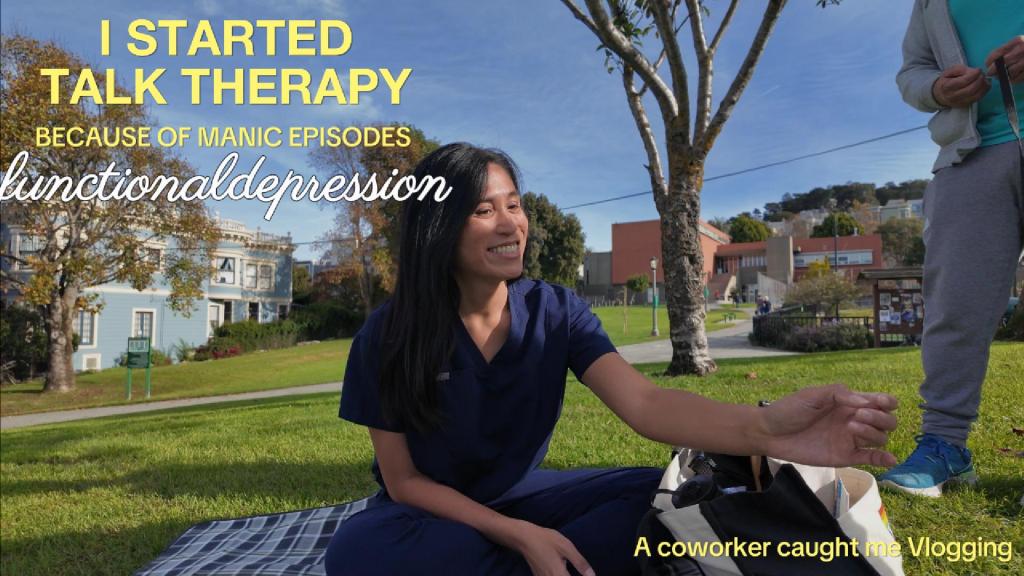
Check out my Youtube Channel
Leaning Into Vulnerability: My Journey Back to Therapy as a Nurse Practitioner
As a nurse practitioner, anxiety with panic is something I am painfully familiar with. The “what ifs,” the fear of missing something important, the spiraling thoughts that start quietly and then take over — these aren’t just symptoms my patients describe. They’re symptoms I’ve lived, managed, and sometimes survived.
Functional depression and anxiety with panic attacks are realities I share with many of the patients I care for. And the truth is, acknowledging that overlap has pushed me to reevaluate the way I show up — both for them and for myself. It’s finally time for me to become a better person, a better provider, and a better advocate for my own healing.
Returning to Therapy — This Time With Honesty
Starting talk therapy again was a decision rooted in necessity, but also humility. My past experiences were unhelpful, and I carried resentment, skepticism, and a sense of hypocrisy. How could I tell my patients to “give therapy a chance” when I had never fully surrendered myself to it?
This time was different.
I shared my fears, my weaknesses, my vulnerability. I talked openly about grieving the loss of a friend — someone whose sudden distance left me confused and hurt, a wound I am still in the process of healing. I talked about my fear of my own emotional extremes, the ways I oscillate from soaring highs to crushing lows. I described these highs as grandiose emotions — not because I am manic, but because I am finally learning what it feels like to believe in myself, to think I have something to say.
My therapist said it best: maybe it just feels unfamiliar. Maybe confidence — authentic, earned confidence — feels foreign when you’ve spent years minimizing your own voice.
And I realized: the reason I’m giving therapy another chance is because it lets me see myself through a different perspective, one that isn’t hyperfocused, self-critical, or catastrophizing. It’s teaching me that my voice matters. My story matters. And that sharing it could make someone else feel less alone.
The Medication Journey — And the Supplements That Help
Like many of my patients, I’ve navigated the daunting maze of mental health medications.
- Lexapro helped, but it numbed my emotions to the point where I didn’t feel like myself.
- Wellbutrin heightened my anxiety so severely that it landed me in the emergency room — an experience both terrifying and humbling.
- Prozac, my current medication, has been stabilizing. It has leveled the emotional waves of functional depression and anxiety just enough for me to breathe again.
I also take gabapentin as needed, though its impact on my focus makes it difficult to rely on while working.
Because of that, I’ve incorporated non-pharmacological supplements — something many of my patients ask about, and something I wanted to personally understand before recommending.
- Ashwagandha has helped regulate my stress response and support cortisol balance. It has grounded me during moments when my body jumps into fight-or-flight for no reason.
- The one I use: Ashwagandha Supplement
- Rhodiola rosea has supported my energy, concentration, and ability to emotionally “reset” without spiraling.
- My preferred brand: Rhodiola Rosea
These supplements aren’t magic, but they’ve been helpful tools alongside therapy, medication, and lifestyle strategies.
Why I’m Sharing This
As I continue this journey, I am committed to building a stronger foundation for myself — one grounded in honesty, vulnerability, and resilience. I hope this becomes an example to others, including my patients:
that healing isn’t linear, that being open is powerful, and that vulnerability is a strength, not a flaw.
I’m excited for who I am becoming. I’m proud of the courage it takes to start again.
And I hope my voice reminds someone out there that theirs matters too.
 Day in the life of a Filipina Nurse Practitioner
Leave a comment